







Auto-labelling
Manual tagging can’t keep pace with your range.
GEMA adds physical and contextual attributes at scale, connected by relationships rather than left as loose tags.
Drop shoulderCold snap
+12 more on this product

GEMA enriches every product with meaningful data, so search, recommendations and AI answers can be as relevant as your best merchandiser.
We run a sample of your own products through GEMA before the call.
Illustrative products. Physical and contextual attributes, related products and shopper language.
Trusted by 750+ brands worldwide












Today each tool tags products its own way. With GEMA, search, product pages, feeds, AI answers and CRM all draw on the same understanding of your range.
Shoppers find “something cosy for a cold weekend” even when no product title says it.
Search and category pages understand occasion, style and fit, and merchandising rules apply to meaning, not keywords.
No results for “cosy jumper for a cold weekend”. Showing results for jumper.
Keyword match only. Anything called a jumper shows up; “cosy” and “cold weekend” mean nothing.
Matched on occasion and weather, not just keywords.
Richer, on-brand product detail on every page.
Richer product descriptions, complete-the-look and personalised recommendations. Dynamic product detail pages drawn from the same graph, in your tone of voice.
Home › Knitwear
Jumper
£89
Colour: Brown
The basics are there, but no context: how it wears, when to wear it, what goes with it.
Knitwear › Jumpers › Chunky knit
Chunky knit jumper
£89
Chunky rib-knit crew neck for cold snaps and weekends away.
+15 attributes from GEMA
Style this look
Show up in AI answers as the right product, described the right way.
Feeds and answer engines get descriptions grounded in the occasions, styles and words shoppers actually use, not just the four fields in your feed.
Brown knitwear jumper in a wool blend. Available in sizes S–XL.
Source: product feed
SHOPPING FEED4 fields
Four feed fields. Generic, easy to pass over.
A chunky rib-knit crew neck with a relaxed fit, made for cold snaps and weekends away.
SHOPPING FEED4 → 19 fields
Grounded in 19 attributes and relationships in your graph.
Build edits like “the cold-weekend edit” from meaning, not manual SKU lists.
Curated pages stay current as the range changes, because they are defined by attributes and rules.
Home › Women › Knitwear › New in
Built by hand from SKU lists, out of date by next week.
Across categories, and it updates itself as the range changes.
Recommendations that understand intent and sell across categories.
GEMA reads why a shopper is browsing, the occasion, style and need, and pairs products across categories: trousers, a tote and boots for a jumper, not three more jumpers.
More from the same category. Nothing to wear it with.
Cross-category, matched on intent, not just what others bought.
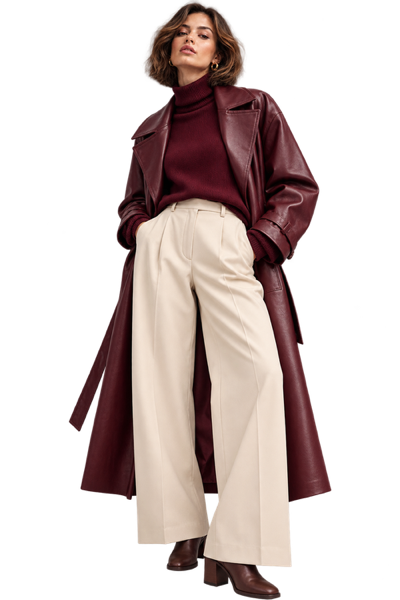
Complete outfits at range scale, built on your own styling rules.
Compatibility comes from your authored rules and expertise, applied across the whole catalogue.
One product, one photo. Shoppers style it themselves, or leave.
Shop the look
 1234
Outfits built from your own styling rules, for every product.
Personalise by the styles and occasions each customer cares about.
Segments and content draw on product meaning, not just past purchases.
New arrivals this week
Same email for everyone.
From: Your Brand · To: Sam
Triggered by cold-snap forecastSam, your cold-weekend edit
Built from the styles and occasions each customer engages with.
Returns Intelligence uses a retailer’s own numbers to show what returns cost and why they happen.
Replaces assumption-led size ratios with demand forecasts from product, sales and attribute data, reducing fragmented stock, markdowns and margin leakage.
Every return, by what the customer did when buying
SHARE OF RETURNS
Style only
39.1%bought two or more different garments of the same typeBoth
10.1%compared styles and bought several sizes in the same basketSize only
14.5%bought the same garment in two or more sizesOut of reach
36.4%one garment in one size, nothing to compare it withStyle is involved in 49.2% of returns and size in 24.6%.
Product data says what an item is. Your team’s knowledge and your shoppers’ language say what it means. GEMA brings them together.
1 · FEED AND TRAIN THE GRAPH
2 · GEMA MANAGES MEANING
Built on Domain Knowledge Packs, controlled by you
Physical and contextual attributes, at range scale
Every attribute and relationship, in one place
Set once, applied on every surface
AI makes the first pass, your team signs off
3 · YOUR BRAND KNOWLEDGE GRAPH
One connected source of meaning, owned by your brand.
4 · EVERY SURFACE
Domain Knowledge Packs are ready-made sets of attributes, structure and shopper language for a retail category. You shape them into your own brand ontology.
Ready-made category expertise for womenswear, menswear and footwear, from dresses and tailoring to knitwear, outerwear and boots.
PHYSICAL ATTRIBUTES15 families
NECKLINE9 values
CONTEXTUAL ATTRIBUTES7 families
OCCASION9 values
Shape it into your brand
SHOPPERS SAY
maps to
TAILORED TO YOUR BRAND
YOUR VERSION
Ready-made category expertise for skincare, make-up, haircare and fragrance.
PHYSICAL ATTRIBUTES11 families
FINISH7 values
CONTEXTUAL ATTRIBUTES6 families
CONCERN8 values
Shape it into your brand
SHOPPERS SAY
maps to
TAILORED TO YOUR BRAND
YOUR VERSION
Ready-made category expertise for textiles, furniture, lighting and decor.
PHYSICAL ATTRIBUTES11 families
MATERIAL10 values
CONTEXTUAL ATTRIBUTES6 families
ROOM7 values
Shape it into your brand
SHOPPERS SAY
maps to
TAILORED TO YOUR BRAND
YOUR VERSION
A brand knowledge graph is a connected map of every product in your catalogue: what it is, what it’s for, how it relates to the rest of your range and how shoppers describe it.
We run a sample of your catalogue through GEMA before the demo.
Labels alone aren’t enough. GEMA connects them with relationships and rules, and your team approves what goes live.
Manual tagging can’t keep pace with your range.
GEMA adds physical and contextual attributes at scale, connected by relationships rather than left as loose tags.
Generic taxonomies don’t speak your brand.
Built on Domain Knowledge Packs and shaped to your vocabulary. Controlled by you, for your brand.
You can’t manage what you can’t see.
See every attribute and relationship, the way search, recommendations and AI see your catalogue.
Every tool gets set up its own way.
Set trading and brand intent once and apply it on every surface, instead of in every tool.
AI alone isn’t enough for your brand.
AI makes the first pass. Your team reviews and approves, with a full audit trail.
Everything you need to know about GEMA before you talk to us. Can’t find your answer?
Contact usA brand knowledge graph is a connected map of every product in your catalogue: what it is, what it’s for, how it relates to other products and how shoppers describe it, organised in your brand’s own vocabulary.
Domain Knowledge Packs are ready-made sets of attributes, structure and shopper language for a retail category, such as womenswear or beauty. You start from expert depth and shape them into your own brand ontology.
A PIM stores product records. GEMA adds meaning on top: contextual attributes, relationships and rules, managed by your team and used on every surface.
Faster than you’d think. GEMA works from the data you already have: your product feed, catalogue and attributes. We connect to it, enrich it, your team reviews, makes refinements where needed and approves. Typical time to first enriched graph is 4 weeks, with full rollout depending on what’s in scope.
No. GEMA is complementary to the tools you already use. It enhances your search, recommendations, feeds and campaigns by giving them a richer understanding of every product, so you get more from your existing stack without replacing it.



Book a demo and we’ll run a sample of your products through GEMA before the call.

We use a third party to perform the registration for our content. This third party may collect data about your activity. Please review the details and accept the service to complete the registration.

